
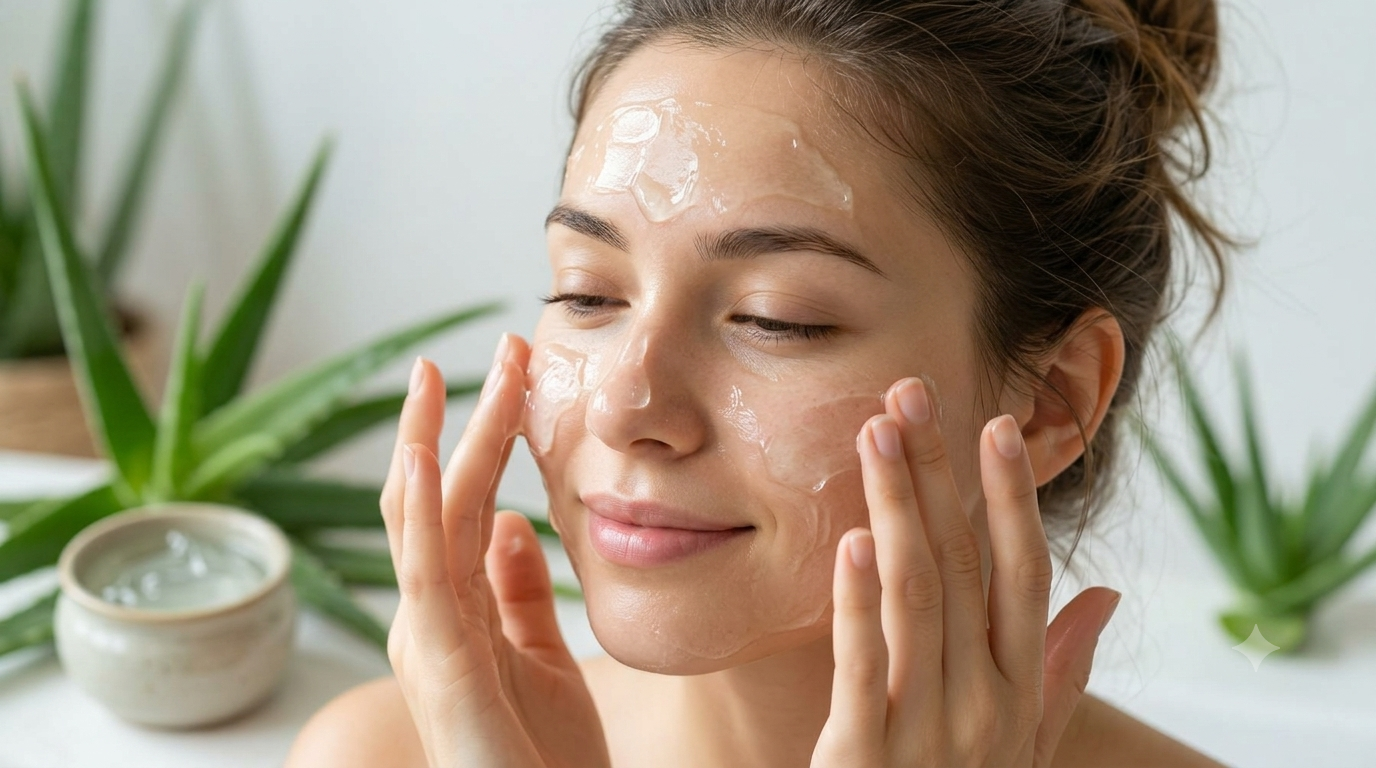
Aloe vera has been used in skincare for generations, and today you can find it in facial gels, moisturizers, lotions, cleansers, after-sun products, and other personal-care formulas. Its lightweight texture and cooling feel make it especially popular with people who want simple skincare without a heavy, greasy finish. But does aloe vera actually moisturize your face? Can you use aloe vera gel on oily skin? And what about leaving aloe vera on your face overnight? The answers depend on your skin type, the product you choose, and what you expect aloe to do.
Aloe vera can provide lightweight hydration and may help soothe irritated skin, but it is not a complete skincare treatment for every concern. Aloe gel can work well for some people with oily, combination, or mildly dry skin, while others may need a more complete moisturizer. If you have sensitive skin, dermatitis, acne, or persistent irritation, the entire product formula matters just as much as the aloe itself.
This guide explains the aloe vera gel for face benefits, how to use aloe vera safely, whether it can clog pores, how it works for oily and dry skin, whether you can leave it on overnight, and what to know about claims involving skin brightening and whitening.
What Are the Benefits of Aloe Vera Gel for the Face?
Aloe vera gel can provide lightweight hydration and a soothing sensation, making it a useful ingredient in some facial skincare products. Aloe contains a large amount of water along with naturally occurring plant compounds. When used in a suitable topical formulation, it can help the skin feel refreshed and hydrated without the heavier texture associated with some creams.
The potential benefits depend on the formulation and the condition of your skin. A plain, fragrance-free aloe gel may feel comfortable after cleansing or sun exposure, while an aloe-based moisturizer can provide additional ingredients that support the skin barrier. Research has also investigated topical aloe in several skin-related applications, although the strength of evidence varies by condition. For example, a systematic review of randomized controlled trials found potential benefits from aloe in reducing radiation-induced dermatitis, while also calling for more high-quality research.
Aloe Vera Gel for Face Benefits at a Glance
The most realistic aloe vera gel for face benefits include:
- Lightweight hydration
- A cooling and soothing sensation
- Temporary relief from feelings of tightness
- Support for a comfortable skincare routine
- Hydration without necessarily leaving a heavy, oily finish
Aloe should not be viewed as a miracle ingredient. It cannot permanently change your natural skin tone, replace sunscreen, or guarantee that acne will disappear. Its biggest appeal is that it can be a simple, lightweight addition to a well-rounded skincare routine.
Is Aloe Vera a Good Moisturizer?
Yes, aloe vera can be moisturizing, but aloe vera gel alone may not be enough to replace a complete moisturizer for everyone. Aloe can add water to the outer layers of the skin and make it feel softer and more comfortable. However, effective moisturization generally involves more than hydration alone. A well-formulated moisturizer can combine humectants, emollients, and occlusive ingredients to help hydrate the skin and reduce water loss.
This distinction matters if you’re searching for “is aloe vera a good moisturizer?”, “is aloe vera moisturizing?”, or “can you use aloe vera as a moisturizer?” The answer is often yes for lightweight hydration, but your skin type determines whether you need additional products.
Someone with oily skin may find a simple aloe-based gel comfortable on its own. Someone with very dry skin may apply aloe first and then use a richer moisturizer containing ingredients such as glycerin, ceramides, or other barrier-supporting ingredients.
Aloe Vera Gel as Moisturizer: Who Is It Best For?
Aloe gel can be particularly appealing if you dislike thick creams or products that leave a greasy film. Its lightweight texture may work well for oily and combination skin, especially during warmer or humid weather.
The American Academy of Dermatology recommends that people with acne-prone skin still moisturize and suggests looking for products labeled oil-free and non-comedogenic when appropriate.
For dry skin, aloe can be one step in a moisturizing routine rather than the entire routine.
Aloe Vera Gel on Oily Skin: Is It a Good Choice?
Aloe vera gel can be a good lightweight option for oily skin when the product is suitable for your face and does not contain ingredients that irritate or contribute to breakouts. Having oily skin does not mean you should avoid hydration. In fact, skipping moisturizer completely can make a skincare routine harder to tolerate, particularly if you’re using acne treatments that cause dryness.
Aloe gel is attractive for oily skin because it generally feels lighter than a rich cream. You can apply a thin layer after cleansing and see whether your skin remains comfortable throughout the day. If your face becomes tight afterward, use an appropriate lightweight moisturizer instead of repeatedly adding more aloe.
The product label matters. Look for terms such as non-comedogenic, oil-free, or won’t clog pores when clogged pores and acne are concerns. The AAD recommends these types of labels when choosing moisturizers for acne-prone skin.
Can Aloe Vera Clog Pores?
Aloe vera does not automatically clog pores, but the complete formulation of an aloe product matters. A bottle labeled “aloe vera gel” can contain many ingredients besides aloe. Fragrance, oils, dyes, alcohol, preservatives, and other botanical ingredients may affect how your skin responds.
That’s why the answer to “can aloe vera clog pores?” and “will aloe vera clog pores?” is not simply yes or no. A lightweight, non-comedogenic aloe gel may work well for one person, while another product marketed around aloe may cause congestion or irritation.
If you are prone to breakouts, introduce one new product at a time. If small bumps or acne consistently appear after introducing a particular aloe product, stop using it and reassess the formula.
Aloe Vera for Dry Skin: Can It Help?
Aloe vera can help dry skin feel more hydrated, but aloe gel may not provide enough moisture for very dry skin by itself. Dry skin often needs both hydration and ingredients that help support the skin barrier and reduce water loss.
This is why aloe for dry skin can work best when combined with a more complete moisturizing routine. Apply aloe to slightly damp skin if it feels comfortable, then follow with a moisturizer designed for dry skin. Ingredients such as glycerin and ceramides are commonly used in moisturizers formulated for dry skin.
If your skin remains tight after using aloe, that does not necessarily mean aloe is “bad” for dry skin. It may simply mean the product is too lightweight for your needs.
Can Aloe Vera Dry Out Skin?
Questions such as “does aloe vera dry out skin?”, “can aloe vera dry out skin?”, and “does aloe dry out skin?” usually arise when someone experiences tightness after applying aloe.
Aloe itself is not automatically a drying ingredient. However, an aloe product can contain alcohol, fragrance, or other ingredients that may irritate certain skin types. A lightweight gel may also provide hydration without supplying enough barrier-supporting ingredients for someone with very dry skin.
If your skin feels tight after using aloe, apply a suitable moisturizer afterward. If you experience burning, itching, swelling, or a persistent rash, stop using the product.
Aloe Vera for Sensitive Skin
Aloe vera gel for sensitive skin can be suitable for some people, but sensitive skin can react to botanical ingredients just like it can react to other skincare ingredients. The fact that aloe comes from a plant does not guarantee that every aloe product will be gentle.
If you have sensitive skin, choose a simple product designed for facial use. A fragrance-free formula may be preferable, particularly if your skin is already irritated. Patch-test a new product on a small area before applying it to your entire face.
Pay attention to the entire ingredient list rather than focusing only on the percentage or presence of aloe. A product can contain aloe and still include ingredients that your skin does not tolerate.
How to Apply Aloe Vera on Your Face
If you’re wondering how to apply aloe vera on face, keep the process simple.
- Cleanse your face with a gentle cleanser.
- Pat your skin dry or leave it slightly damp.
- Apply a thin layer of facial aloe vera gel.
- Allow it to absorb.
- Apply moisturizer if your skin needs additional hydration.
- During the day, finish with a broad-spectrum sunscreen.
The American Academy of Dermatology recommends broad-spectrum sunscreen with an SPF of 30 or higher as part of sun protection.
You don’t need a thick coating of aloe to get its potential benefits. Applying more product does not automatically produce better results.
How to Use Aloe Vera Gel on Face at Night
To use aloe vera gel on your face at night, cleanse your skin, apply a thin layer of a facial aloe product, and follow with moisturizer if needed. This is a straightforward way to include aloe in an evening skincare routine.
If you are using aloe vera for face overnight, make sure the product is intended to be left on the skin. Some aloe products are masks or cleansers and should be rinsed off according to their instructions.
There is no special overnight transformation that occurs simply because aloe stays on your face while you sleep. The main benefit of nighttime use is convenience. A suitable leave-on product can remain on the skin while you sleep, allowing its moisturizing and soothing ingredients to remain in contact with your skin.
Aloe Vera on Face Overnight: What Results Can You Expect?
Aloe vera on face overnight may leave your skin feeling softer, more hydrated, and refreshed the next morning if your skin tolerates the product. Hydrated skin can also temporarily appear smoother.
However, don’t expect overnight aloe use to erase acne scars, remove wrinkles, permanently brighten your complexion, or dramatically change your skin tone.
If a product causes redness, itching, burning, or swelling overnight, wash it off and discontinue use.
How Long Should You Leave Aloe Vera on Your Face?
How long to leave aloe vera on your face depends on the type of product you’re using. A leave-on facial gel can generally remain on the skin according to its label directions, while an aloe mask or wash-off treatment should be removed at the recommended time.
There is no universal rule saying aloe needs to remain on your face for exactly 20, 30, or 60 minutes. Longer contact does not automatically mean better results.
If you are trying aloe for the first time, start conservatively. If your skin feels comfortable, you can incorporate the product into your routine as directed. If it starts to sting, burn, itch, or become unusually tight, rinse it off.
Aloe Vera for Sun-Exposed Skin
Aloe vera is widely associated with after-sun skincare because its cooling texture can feel soothing on mildly sunburned skin. The American Academy of Dermatology recommends applying an aloe- or soy-containing moisturizer to damp skin to help relieve discomfort from sunburn.
Cleveland Clinic also explains that aloe can help soothe sunburn but does not reverse the underlying UV damage.
That distinction is important. Aloe is not sunscreen. It cannot prevent UV exposure from damaging your skin, and applying aloe after a sunburn does not undo that damage.
Aloe Vera Lotion After Sun
An aloe vera lotion after sun can be useful when your skin needs both soothing and moisture. Compared with a basic aloe gel, a lotion may contain additional moisturizing ingredients that make it more suitable for dry or sun-exposed skin.
If your skin is severely burned, blistered, swollen, or causing significant pain, don’t rely solely on aloe. Severe sunburn may require medical attention.
Aloe Vera for Dermatitis: What Does the Evidence Say?
Aloe vera has been studied for some forms of skin inflammation, but there isn’t enough evidence to consider it a universal treatment for dermatitis. Dermatitis describes several different skin conditions, and treatment depends on the underlying cause.
Research has investigated aloe in radiation-induced dermatitis, with one systematic review reporting potential benefits but emphasizing the need for additional high-quality studies.
If you have persistent eczema, contact dermatitis, severe itching, cracked skin, swelling, or repeated rashes, talk with a dermatologist or other qualified healthcare professional. Aloe may be comfortable for some people, but it should not replace an appropriate medical treatment plan.
Does Aloe Vera Lighten or Whiten Skin?
Aloe vera should not be considered a skin-bleaching or skin-whitening treatment. There is an important difference between skin looking temporarily fresher because it is hydrated and actually changing its natural pigmentation.
Searches such as “aloe vera for skin fairness,” “aloe vera gel skin lightening,” “aloe vera gel whiten skin,” “aloe vera gel for whitening skin,” and “does aloe vera bleach skin?” reflect a common skincare concern, but these claims should be approached carefully.
Aloe may hydrate and soothe the skin, which can make it appear smoother or more radiant. That is not the same as permanently lightening your natural skin color.
Aloe Vera for Skin Brightening
Aloe vera gel for skin brightening may make hydrated skin appear temporarily fresher, but aloe should not be marketed as a proven skin-whitening ingredient.
If your concern is uneven pigmentation, dark spots, melasma, or post-acne marks, focus on evidence-based skincare and consistent sun protection. Sun exposure can worsen many pigmentation problems, so daily broad-spectrum sunscreen is much more important than relying on an aloe gel for brightening.
Be particularly cautious with products that promise dramatic whitening within a few days. Claims of rapid and permanent complexion changes deserve scrutiny.
Aloe Vera Soap Benefits: Is It Good for Your Face?
Aloe vera soap can cleanse the skin and may provide some of the soothing appeal associated with aloe, but it is not automatically better for the face than a gentle facial cleanser.
Soap is primarily a cleansing product. Unlike a leave-on aloe gel, it is usually rinsed away relatively quickly. If your facial skin is dry or sensitive, a harsh cleansing bar can leave it feeling tight even if aloe appears on the ingredient list.
If you want to use an aloe-containing cleanser, choose one formulated for facial skin and consider your skin type. People with dry or sensitive skin may prefer a gentle, fragrance-free cleanser.
What About Aloe Vera Oil for Skin?
Aloe vera oil for skin is different from a standard aloe vera gel. Products marketed as aloe oil may contain aloe extracts combined with carrier oils or other ingredients, so the product’s complete formula is important.
If you have oily or acne-prone skin, don’t assume that an “aloe” oil will behave like a lightweight aloe gel. Oils can feel significantly richer, and some people may prefer to avoid them on areas prone to congestion.
Read the ingredient list and choose products based on your skin type rather than the word “aloe” alone.
Aloe Vera Gloves and Other Aloe Products
Products such as aloe gloves are designed to deliver skincare ingredients to the hands rather than the face. Their effectiveness depends on the material, formulation, how frequently they are used, and the specific skin concern being addressed.
They should not be treated as evidence that aloe products in general provide the same results on every part of the body. If you’re choosing aloe skincare, consider the intended use of the product and follow its instructions.
Aloe Vera and Your Skin Type: Quick Guide
| Skin type | Can aloe be useful? | What to consider |
| Oily | Yes | Choose a lightweight, non-comedogenic formula |
| Combination | Yes | Use more or less moisturizer depending on the area |
| Dry | Yes, but may be insufficient alone | Follow with a richer moisturizer if needed |
| Sensitive | Possibly | Patch-test and consider fragrance-free formulas |
| Acne-prone | Possibly | Look for non-comedogenic products |
| Irritated | Potentially soothing | Avoid irritating formulas and seek care if symptoms persist |
Aloe Vera vs. a Traditional Face Moisturizer
| Feature | Aloe vera gel | Traditional moisturizer |
| Texture | Usually lightweight | Varies from gel to cream |
| Hydration | Yes | Yes |
| Barrier support | Depends on formula | Often specifically formulated for it |
| Best for very dry skin | May be insufficient alone | Usually more suitable |
| Oily skin | Often comfortable | Choose a lightweight formula |
| Non-comedogenic options | Available | Widely available |
| Can replace all skincare? | No | No |
The important takeaway is that aloe and moisturizer don’t necessarily need to compete. In some routines, they can work together.
How to Add Aloe Vera to a Simple Skincare Routine
A simple routine is often easier to maintain than a complicated one with multiple overlapping products.
Morning
Cleanser → Aloe gel if desired → Moisturizer → Broad-spectrum SPF 30+ sunscreen
If your moisturizer already contains aloe, you may not need a separate aloe gel.
Night
Cleanser → Aloe gel if desired → Moisturizer
If your skin is dry, you may find that moisturizer is more important than adding extra layers of aloe.
Common Mistakes to Avoid When Using Aloe Vera
One common mistake is assuming that every aloe product is interchangeable. A facial gel, body lotion, soap, after-sun lotion, and aloe oil can have completely different formulations and purposes.
Another mistake is using aloe as a replacement for sunscreen. Aloe can soothe sun-exposed skin, but it does not protect against UV radiation. Daily sun protection remains an important part of facial skincare.
A third mistake is expecting dramatic overnight results. Aloe vera for face overnight can provide hydration and a soothing feel, but it cannot transform your skin in a single night.
Finally, don’t ignore irritation. If your skin burns, becomes swollen, develops a rash, or repeatedly breaks out after using a product, stop using it.
Frequently Asked Questions About Aloe Vera on the Face
Is Aloe Vera Good for Your Face Every Day?
Aloe vera can be used daily if your skin tolerates the specific product. A lightweight, facial-use aloe gel may fit into a morning or nighttime routine. If your skin becomes dry, tight, itchy, or irritated, reduce use or discontinue the product.
Can Aloe Vera Help Dry Skin?
Yes, aloe vera can provide lightweight hydration and may make dry skin feel more comfortable. However, very dry skin may need a complete moisturizer containing ingredients that help support the skin barrier. Aloe does not necessarily replace a moisturizer.
Can Aloe Vera Dry Out Skin?
Aloe vera itself is not automatically drying, but some aloe products can leave skin feeling tight or irritated. The rest of the formula matters. If a product contains potentially irritating ingredients or does not provide enough moisturizing support for your skin, you may experience dryness.
Can You Use Aloe Vera as a Moisturizer?
You can use aloe vera as a lightweight hydrating step, but whether it can replace your moisturizer depends on your skin type. Oily skin may be comfortable with a lightweight aloe gel, while dry skin often benefits from applying a traditional moisturizer afterward.
Will Aloe Vera Clog Pores?
Aloe vera does not automatically clog pores. However, the complete formula of the product matters, and individual skin can respond differently. If you’re prone to acne or clogged pores, choose products labeled non-comedogenic or won’t clog pores.
Is Aloe Vera Good for Sensitive Skin?
It can be, but not everyone with sensitive skin will tolerate aloe. Choose a simple, fragrance-free product when possible and patch-test before applying it to your entire face. Stop using it if you experience burning, itching, swelling, or a rash.
Can I Leave Aloe Vera on My Face Overnight?
Yes, if you’re using a leave-on facial aloe product and your skin tolerates it. Follow the product’s instructions rather than assuming that every aloe product should stay on overnight. Overnight use does not create instant whitening, acne removal, or scar reduction.
Does Aloe Vera Bleach or Whiten Skin?
No, aloe vera should not be considered a skin-bleaching or permanent whitening treatment. It may make skin appear temporarily fresher because hydrated skin can look smoother, but this is different from changing your natural skin pigmentation.
Conclusion
Aloe vera can be a useful ingredient in a simple skincare routine, particularly when you want lightweight hydration and a soothing feel. It may work especially well for people who dislike heavy creams, and aloe vera gel on oily skin can be a practical option when the formula is lightweight and non-comedogenic.
Aloe for dry skin, think of aloe as a hydrating layer rather than automatically treating it as a complete moisturizer. Very dry skin may need a richer product containing ingredients designed to support the skin barrier. Similarly, aloe vera gel for sensitive skin can work for some people, but a botanical ingredient is not automatically irritation-free.
Aloe can also be used overnight if you’re using an appropriate leave-on facial product. However, aloe vera on face overnight should be viewed as part of a normal skincare routine rather than a shortcut to dramatic results. It does not permanently whiten skin, bleach your complexion, erase scars overnight, or replace sunscreen.
The simplest approach is to choose a product suited to your skin type, check the full ingredient list, introduce new products gradually, and pay attention to how your skin responds. When persistent acne, dermatitis, severe irritation, pigmentation, or other skin concerns don’t improve with basic skincare, a dermatologist can help determine the right treatment.
Your skin does not need the most complicated routine. It needs products that are appropriate for your skin type, your concerns, and your daily environment.
Tagged: aloe vera gel for face benefits how to use aloe vera gel on face at night