
What Are the Best High-Protein Snacks in 2026?
Last updated: October 2026. Nutrition values are approximate; always check the label on the product you buy.
Feeling hungry between meals? Looking for something that keeps you satisfied without reaching for chips or sugary treats? High protein snacks can help you bridge the gap between meals while adding useful nutrients to your daily diet. The key is choosing healthy protein snacks that you will actually enjoy eating.
⚡ Quick Answer
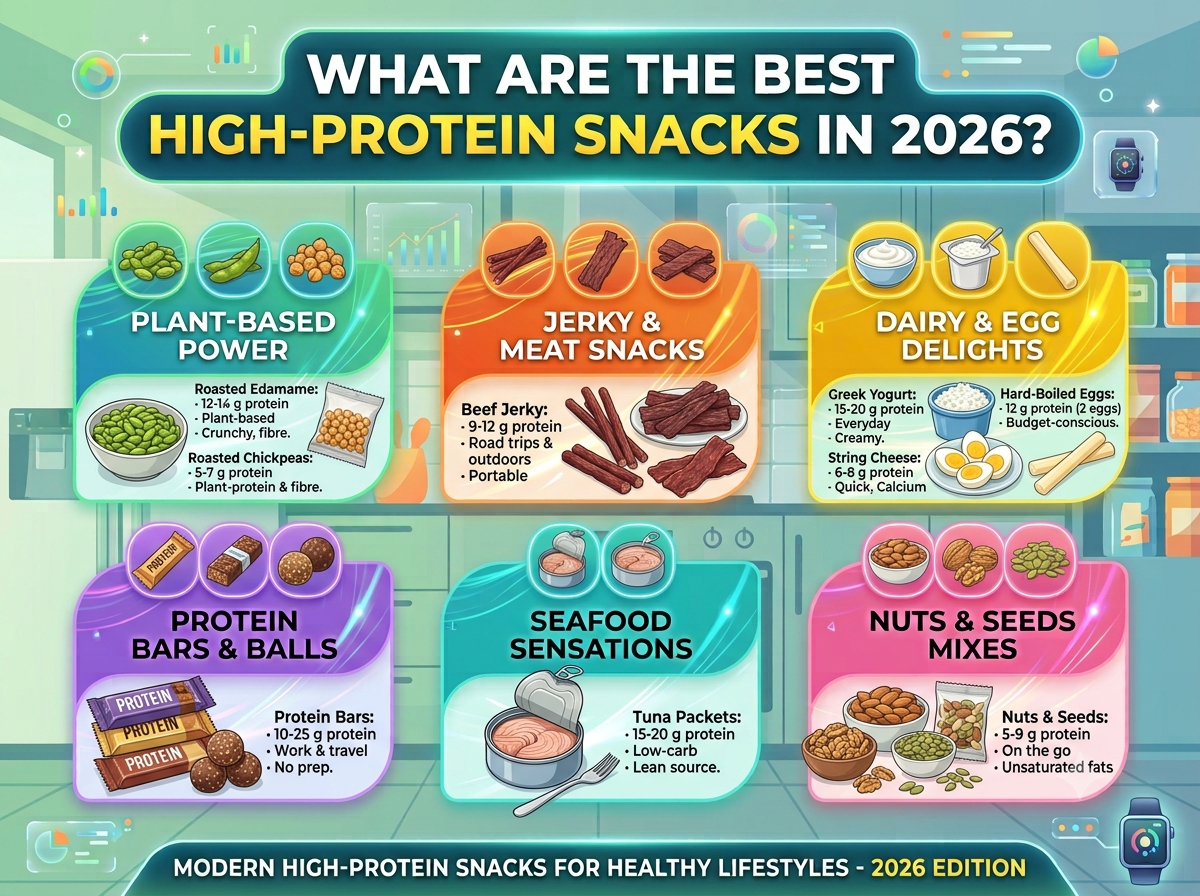
Some of the best high protein snacks include Greek yogurt, cottage cheese, protein bars, roasted edamame, hard-boiled eggs, tuna packets, beef jerky, roasted chickpeas, nuts, and string cheese. Depending on the product and serving size, these snacks high in protein typically provide around 5-25 grams of protein per serving.
The right choice depends on what matters most to you. If you want something creamy and filling, Greek yogurt or cottage cheese may suit you. Prefer a crunchy snack? Try roasted edamame or chickpeas. Need a high protein snack you can keep in your bag for a busy day? A protein bar or suitable variety of beef jerky may be more convenient.
If you’re new to protein snacks, here are three easy recommendations to get you started:
🥣
For everyday snacking
Plain Greek yogurt offers protein and calcium without requiring any preparation.
🌱
For plant-based protein
Roasted edamame provides protein and dietary fibre in a convenient, crunchy form.
🎒
For busy days
Protein bars are easy to carry when you need a quick snack away from home.
If you’re watching your carbohydrate intake, hard-boiled eggs, plain tuna, and string cheese are also worth considering as high protein low carb snacks.
Best High Protein Snacks at a Glance
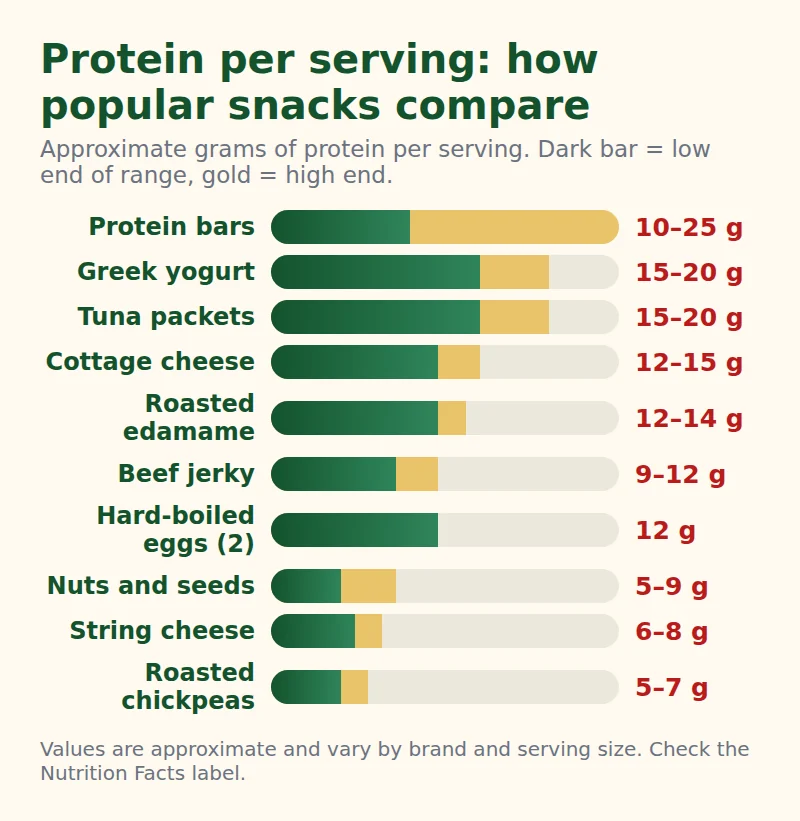
Not sure which snack to choose? Use this table to compare popular high protein snacks before deciding what belongs on your shopping list.
| Snack | Protein per Serving | Best For | Why You Might Like It |
|---|---|---|---|
| Greek yogurt | 15-20 g | Everyday snacking | Creamy, convenient, and a source of calcium |
| Protein bars | 10-25 g | Work, travel, and busy schedules | Easy to carry and requires no preparation |
| Cottage cheese | 12-15 g | A more substantial snack | Soft texture and substantial protein |
| Roasted edamame | 12-14 g | Plant-based diets | Crunchy and provides fibre |
| Beef jerky | 9-12 g | Road trips and outdoor activities | Portable and shelf-stable |
| Hard-boiled eggs | 12 g (2 eggs) | Budget-conscious eating | Simple to prepare and rich in protein |
| Tuna packets | 15-20 g | Low-carb eating | Convenient source of lean protein |
| Roasted chickpeas | 5-7 g | Crunchy snack lovers | Plant protein and fibre |
| Nuts and seeds | 5-9 g | Snacking on the go | Protein and unsaturated fats |
| String cheese | 6-8 g | Quick snacks | Easy to portion and provides calcium |
Nutrition values are approximate and vary by brand, ingredients, preparation method, and serving size. Check individual product labels for precise figures.
How Much Protein Should a Healthy Snack Have?
You don’t need a snack containing 30 grams of protein every time hunger strikes. For many adults, a high protein snack providing approximately 10-20 grams can be a practical way to contribute to daily protein requirements.
Your ideal amount depends on your body weight, age, activity level, dietary habits, and overall nutritional needs.
For generally healthy adults, the recommended dietary allowance for protein is 0.8 grams per kilogram of body weight per day. For example, if you weigh 150 pounds, or approximately 68 kilograms, this works out to around 54 grams of protein daily.
⚖️ Baseline RDA
0.8 g / kg
of body weight per day for generally healthy adults
🧮 Example
≈ 54 g
per day for someone weighing 150 lb (about 68 kg)
This is a baseline recommendation, not a universal target for everyone. People who exercise intensively, older adults, and those with particular medical or nutritional needs may require different amounts.
What does this mean when you’re choosing protein snacks?
Rather than worrying about hitting a large protein number with every serving, look at how the snack fits into your entire day.
For example:
- Greek yogurt can contribute protein and calcium.
- Roasted edamame offers protein alongside dietary fibre.
- Nuts provide some protein and unsaturated fats.
- Eggs supply protein and nutrients such as choline.
A snack doesn’t need to contain every essential nutrient. The goal is to choose foods that complement the rest of your diet.
Which High Protein Snacks Are Best for Different Goals?
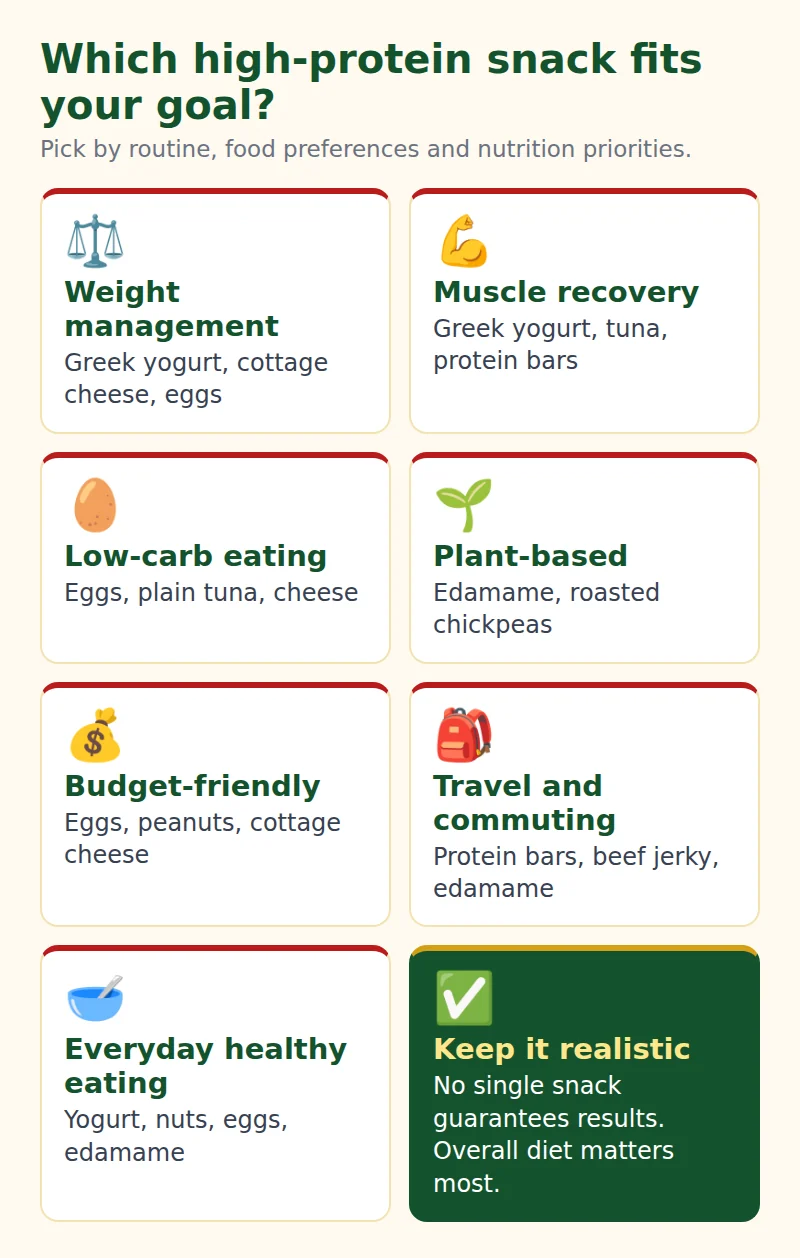
The best snack for you depends on your routine, food preferences, and nutritional priorities. Someone trying to manage hunger at work may want something different from a person following a plant-based diet or preparing for a workout.
Here’s how to narrow down your options, from healthy protein snacks for everyday eating to high protein low carb snacks for lower-carbohydrate routines.
| Your Goal | Snacks Worth Trying | Why They May Suit You |
|---|---|---|
| Weight management | Greek yogurt, cottage cheese, eggs | Protein may help you feel satisfied between meals |
| Muscle recovery | Greek yogurt, tuna, protein bars | Convenient ways to increase protein intake |
| Low-carb eating | Eggs, plain tuna, cheese | Generally low in carbohydrates in their plain forms |
| Plant-based nutrition | Edamame, roasted chickpeas | Provide plant protein and fibre |
| Budget-friendly eating | Eggs, peanuts, cottage cheese | Can be economical depending on local prices |
| Travel and commuting | Protein bars, beef jerky, roasted edamame | Portable options for eating away from home |
| Everyday healthy eating | Yogurt, nuts, eggs, edamame | Offer different nutrients and textures |
Keep your expectations realistic. No single snack guarantees weight loss, muscle growth, or better health. Your overall diet, activity level, sleep, and consistency matter far more than any individual food.
Are High Protein Snacks Good for Weight Loss?
If you’re trying to lose weight, choosing snacks that help you manage hunger can make your eating routine easier to maintain. Protein may promote feelings of fullness, helping some people feel satisfied between meals.
However, eating high-protein foods doesn’t automatically lead to weight loss. Your overall energy intake and daily habits still matter.
The good news is that you don’t need complicated recipes or expensive supplements to make sensible choices. Simple, healthy protein snacks you already know are often enough.
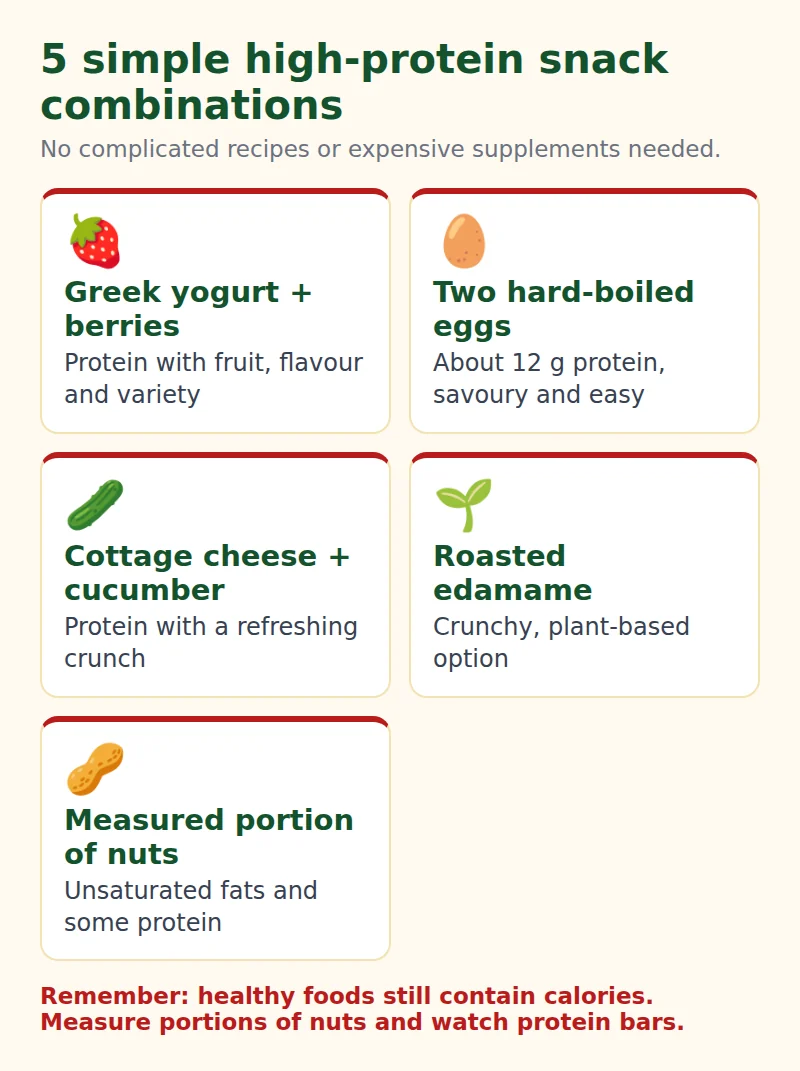
Try these simple snack combinations if you want snacks high in protein without much effort:
🍓 Greek yogurt with berries
Combines protein with fruit, adding flavour and variety without much preparation.
🥚 Two hard-boiled eggs
Provides approximately 12 grams of protein and makes a convenient savoury snack.
🥒 Cottage cheese with cucumber
Offers protein with a refreshing crunch.
🌱 Roasted edamame
Gives you a crunchy, plant-based alternative to conventional snack foods.
🥜 A measured portion of nuts
Provides unsaturated fats and some protein, making it a convenient option when you’re away from home.
💡 One thing worth remembering: healthy foods can still contribute substantial calories.
Nuts and seeds are nutritious, but their energy content adds up quickly when you eat them by the handful. Some protein bars also contain considerable amounts of added sugar or calories.
When comparing options, consider protein, calories, fibre, added sugars, and serving size together. Choose a snack that helps you feel satisfied and fits comfortably into your daily eating pattern.
Are High Protein Snacks Better Than Protein Shakes?
Not necessarily. Both can help you meet your daily protein needs, but the better option depends on your circumstances.
If you enjoy ordinary foods, Greek yogurt, cottage cheese, eggs, and edamame make satisfying protein snacks that also provide other nutrients. Many of these options are easy to incorporate into meals and snacks without purchasing specialised products.
Protein shakes can be useful when you’re short on time, travelling, or struggling to obtain enough protein through your usual meals. They may also appeal to people who prefer drinking their snack rather than eating it.
Here’s a simple comparison.
| Feature | Whole-Food Snacks | Protein Shakes |
|---|---|---|
| Preparation | Some require preparation; others are ready to eat | Usually quick to prepare, although ready-to-drink options need no mixing |
| Portability | Depends on the food and storage requirements | Powder is portable; ready-to-drink products can be convenient |
| Additional nutrients | May provide fibre, calcium, vitamins, and healthy fats | Varies considerably by formulation |
| Cost | Depends on the food, brand, and portion | Depends on the product and serving |
| Best suited for | Everyday eating and dietary variety | Situations where convenient protein intake is a priority |
Which should you choose?
Start with your actual needs. If yogurt, eggs, or other familiar foods help you meet your protein requirements, there’s no automatic reason to purchase a supplement.
If a shake makes it easier to maintain your eating routine, it can be a practical alternative. Just compare the ingredients and nutritional information before buying.
What Should You Look for When Buying High Protein Snacks?
A package claiming to contain extra protein can catch your attention, but that doesn’t necessarily make it the best choice for your needs.
Before adding a product to your shopping basket, spend a moment checking its Nutrition Facts label.
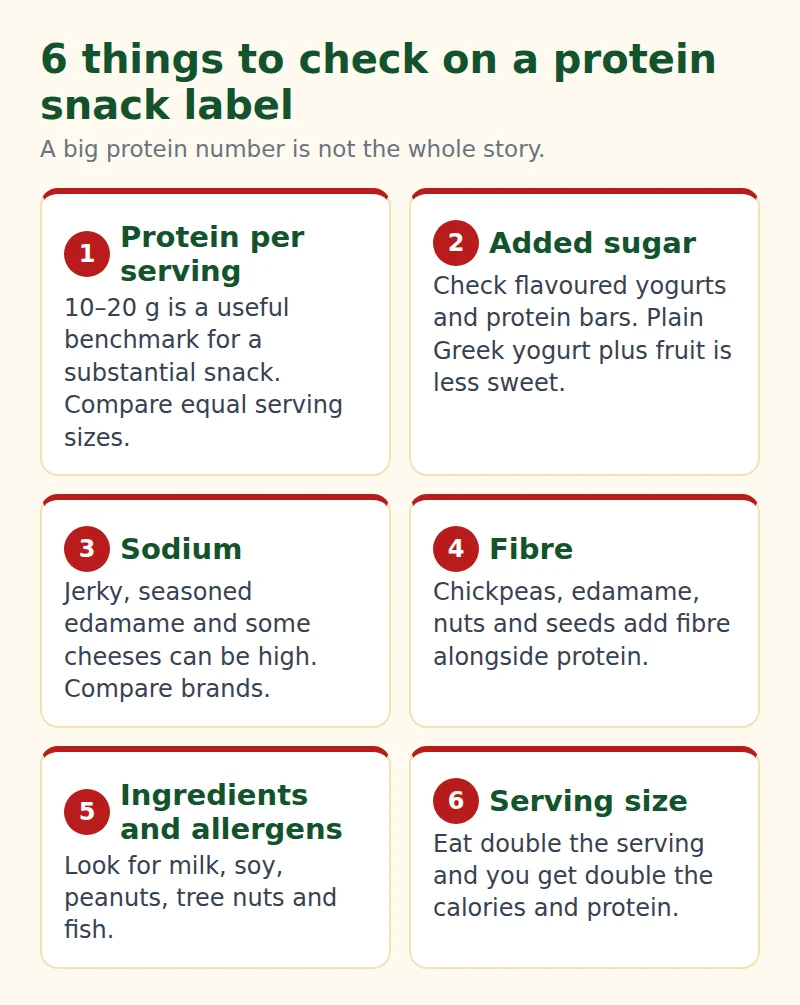
1 Check the Protein Per Serving
For many adults, approximately 10-20 grams can be a useful benchmark for a substantial high protein snack. However, you may need less depending on your meals and daily requirements.
Compare equivalent serving sizes rather than assuming that a product with a bigger protein number is automatically better.
2 Watch the Added Sugar
Some flavoured yogurts and protein bars contain added sugars. This doesn’t mean you must avoid every sweetened product, but comparing brands can help you find an option that better matches your preferences.
If you prefer a less-sweet snack, try plain Greek yogurt with fresh fruit.
3 Pay Attention to Sodium
Packaged beef jerky, seasoned edamame, and some cheese products can contain considerable sodium.
If you’re monitoring your sodium intake, compare the amounts across products. Choosing a lower-sodium alternative may be worthwhile.
4 Look for Fibre
Protein is important, but it isn’t the only nutrient worth considering.
Roasted chickpeas, edamame, nuts, and seeds can provide dietary fibre alongside protein. Including these foods in your routine can also help increase the variety of nutrients you consume.
5 Read the Ingredient List
Check for ingredients you prefer to avoid and review allergen information carefully.
This is especially important if you have allergies to milk, soy, peanuts, tree nuts, fish, or other common food allergens.
6 Compare the Serving Size With What You Actually Eat
A product may appear to offer impressive nutritional figures because its label lists a particular serving size.
If you eat twice that amount, you’ll consume approximately twice the listed calories, protein, and other nutrients.
Pay attention to portion sizes so you can compare products fairly.
💡 The bottom line: Choose a snack based on its overall nutritional profile, your dietary needs, and how conveniently it fits into your day. The highest-protein product isn’t always the most suitable one, and the best high protein snacks are the ones you will actually eat.
Frequently Asked Questions About High Protein Snacks
What snack has the highest protein?
Among common snacks high in protein, certain protein bars, tuna packets, and Greek yogurt products provide substantial amounts of protein. Some protein bars contain 20 grams or more per serving, while individual Greek yogurt portions may provide approximately 15-20 grams. Tuna packets can also be protein-rich, depending on their size. Compare product labels to identify the best option for your needs.
What are the healthiest high protein snacks?
Plain Greek yogurt, cottage cheese, hard-boiled eggs, roasted edamame, and unsalted nuts are worthwhile healthy protein snacks. They provide protein alongside other nutrients, including calcium, fibre, vitamins, minerals, or unsaturated fats. Your best option depends on your dietary preferences, nutritional requirements, and portion size.
What are the best high protein low carb snacks?
Hard-boiled eggs, plain tuna, and string cheese are convenient high protein low carb snacks that generally contain little carbohydrate. Some beef jerky products also fit a low-carb eating pattern. Plain Greek yogurt may be suitable, too, but check its carbohydrate content and watch for added sugars in flavoured varieties.
What are the best high protein snacks for muscle building?
Greek yogurt, cottage cheese, eggs, tuna, and protein bars can help you meet your daily protein requirements. For muscle growth, combine adequate protein intake with resistance training, sufficient calories, and appropriate recovery. Eating a protein-rich snack alone won’t build muscle without the other essential elements.
Can you eat high protein snacks every day?
Yes, most healthy adults can include a high protein snack in their daily eating routine. You can rotate between yogurt, eggs, legumes, nuts, and other suitable foods to introduce variety. If you have a medical condition that affects your protein requirements, consult a qualified healthcare professional for individual guidance.
Are high protein snacks good for controlling hunger?
They can be. Protein may help you feel fuller between meals, although individual responses vary. The snack’s portion size, fibre content, energy content, and your overall eating pattern also influence how satisfying it feels.
What are the best high protein snacks that don’t need refrigeration?
Protein bars, many packaged roasted edamame products, and suitable varieties of beef jerky can be convenient shelf-stable choices. Always follow the product’s storage instructions. Snacks such as yogurt, cottage cheese, eggs, and opened tuna packets may require refrigeration and should be handled according to food-safety guidance.
How We Selected These High Protein Snacks
Choosing a snack involves more than comparing protein numbers. A product may provide plenty of protein but contain ingredients that don’t suit your dietary preferences, while another may offer a more balanced combination of nutrients.
This guide compares commonly available protein snacks by category according to four practical considerations:
🥗 Nutritional value
Approximate protein content and the presence of other useful nutrients.
⏱️ Convenience
How easily the snack fits into a busy schedule.
🔀 Dietary versatility
Whether the option can suit different eating preferences, including plant-based and low-carbohydrate diets.
⚠️ Practical limitations
Considerations such as added sugar, sodium, allergens, preparation, and storage.
The protein figures are estimates rather than independently verified measurements for every brand. Actual values vary by product and serving size.
Before purchasing a particular item, check its current Nutrition Facts label. For general food composition information, consult established nutritional databases such as USDA FoodData Central.
Nutritional Information and Sources
If you want to investigate the nutritional information further, these resources are useful starting points:
USDA FoodData Central ↗
Consult the database for food composition information and estimated nutrient values.
National Institutes of Health (NIH) ↗
Explore scientific information about nutrition and human health.
U.S. Food and Drug Administration (FDA) ↗
Learn how to interpret Nutrition Facts labels and find relevant food-safety guidance.
Cleveland Clinic ↗
Read consumer-oriented educational material about nutrition and dietary choices.
Use food composition databases to compare general nutrient values and authoritative health resources to understand broader dietary recommendations. For packaged snacks, the manufacturer’s current label is the most relevant starting point for product-specific figures.
Editorial Transparency
This article provides general nutritional information to help readers compare high protein snacks. It does not claim that every product has undergone independent laboratory testing or first-hand taste testing.
Product availability, ingredients, prices, and nutritional formulations may change. Check current product information before making a purchase, particularly if you have specific dietary requirements or food allergies.
The information is educational and does not replace personalised advice from a registered dietitian or another qualified healthcare professional.
